
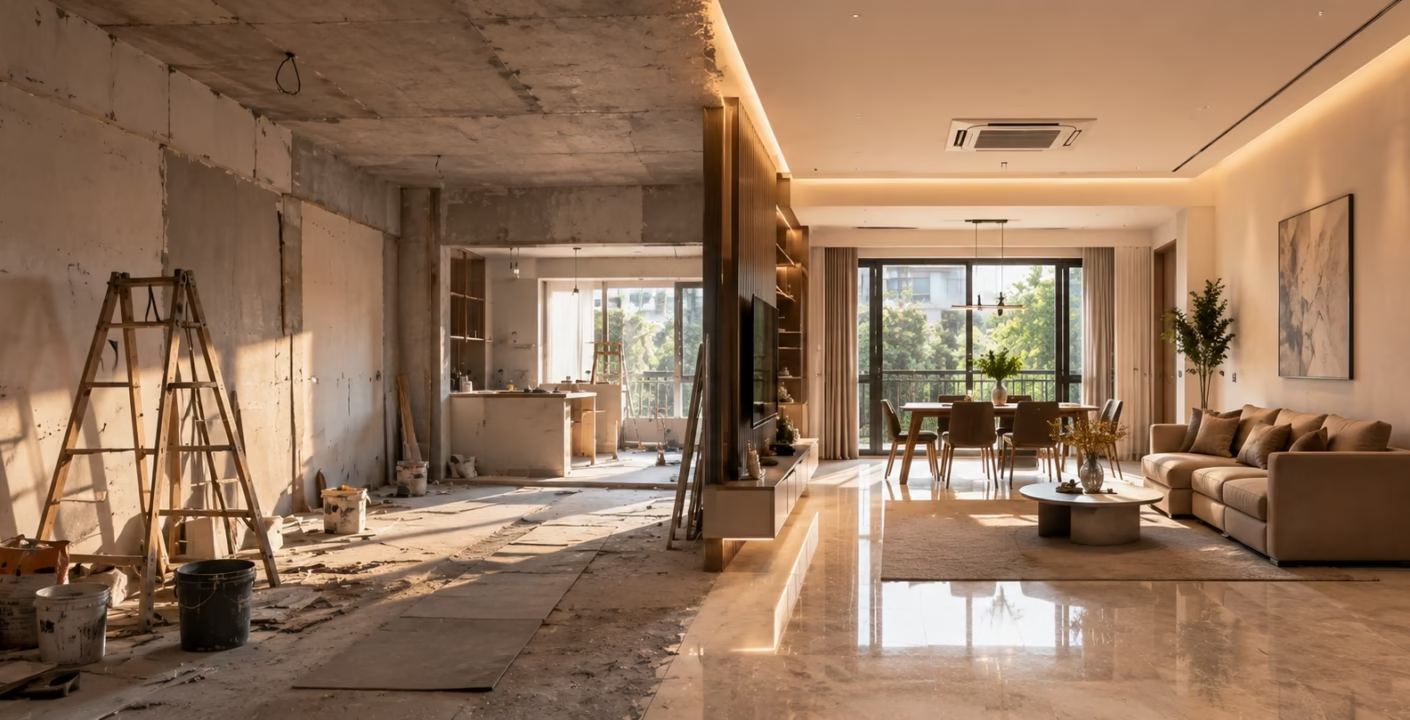
“How long will this take?” is one of the first questions every client asks — and one of the most commonly underestimated answers in the industry. Here’s a realistic, phase-by-phase breakdown, based on how full home interior projects actually unfold in Mumbai.
The Full Timeline, Phase by Phase
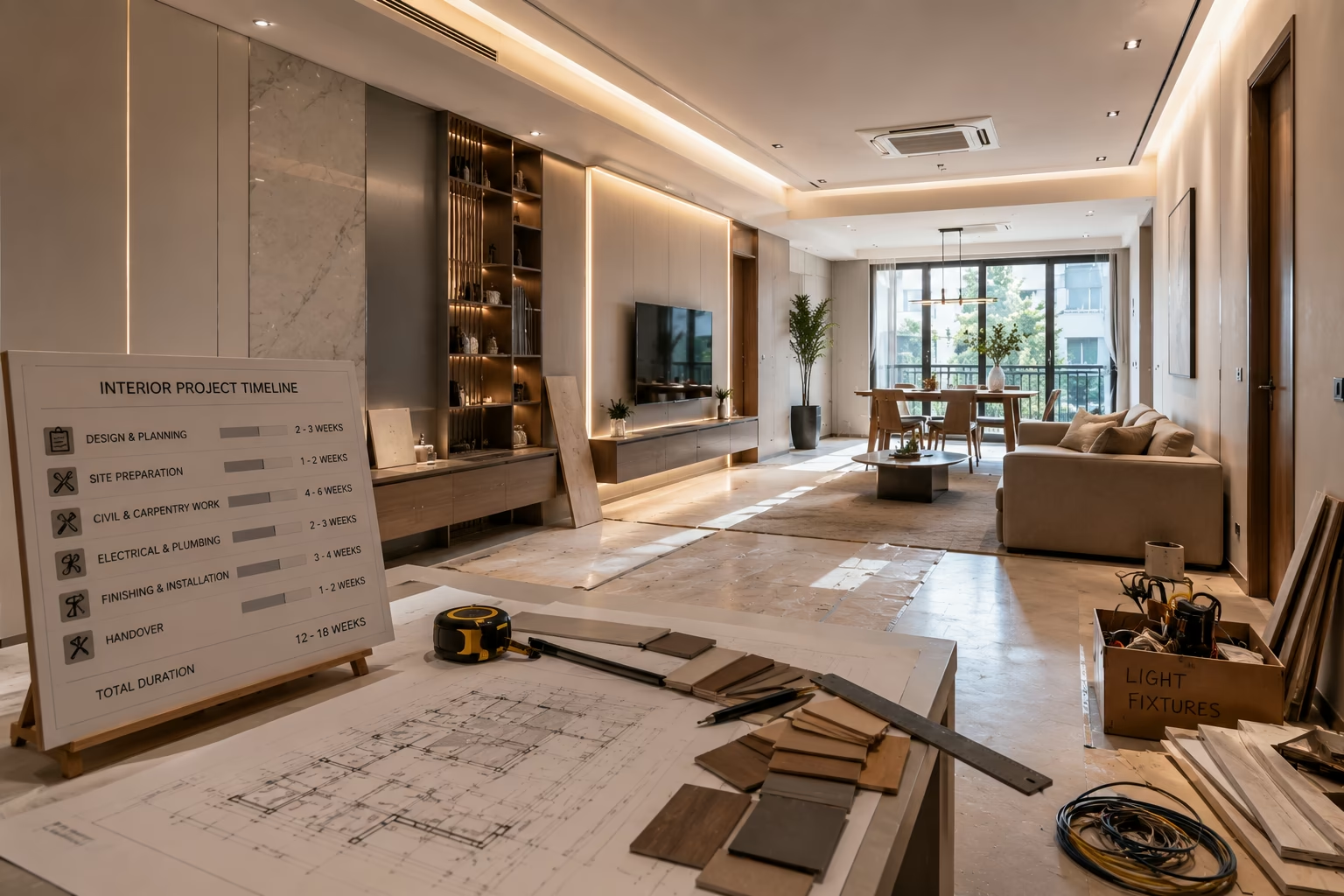
| Phase | Typical Duration | What Happens |
|---|---|---|
| Design & 3D visualization | 1 – 3 weeks | Space planning, material selection, design finalization |
| Approvals & procurement | 2 – 4 weeks | Material ordering, vendor coordination, society approvals if renovation |
| Civil & electrical work | 3 – 5 weeks | Flooring, false ceiling, wiring, plumbing rework |
| Carpentry & modular installation | 4 – 8 weeks | Kitchen, wardrobes, custom furniture fabrication and installation |
| Finishing, painting & styling | 2 – 3 weeks | Final paint, fixtures, décor, snagging checks |
| Total (standard 2–3BHK, new or lightly renovated) | 12 – 18 weeks (roughly 3–4.5 months) |
For a full renovation involving demolition and structural changes, add 3–5 weeks to this range for the additional assessment and civil work phases.
Timeline by Project Size
| Project Type | Realistic Timeline |
|---|---|
| Single room (kitchen or bedroom only) | 3 – 6 weeks |
| 1BHK full home | 8 – 12 weeks |
| 2BHK full home | 10 – 16 weeks |
| 3BHK full home | 14 – 20 weeks |
| Full villa / large format home | 20 – 32 weeks |
What Actually Causes Delays
Timelines slip for predictable reasons — knowing them upfront helps you plan realistically rather than being blindsided:
- Society approval delays, particularly in larger housing complexes with formal committee review cycles
- Material backorders, especially for imported tiles, specific hardware brands, or custom-ordered furniture
- Monsoon season impact — June through September can slow civil work, material delivery, and painting in Mumbai specifically
- Mid-project scope changes — adding or altering design decisions after execution has started almost always extends the timeline
- Structural surprises, common in renovations of older buildings — discovering wiring or plumbing issues once walls are opened up
- Vendor coordination gaps, when design and execution are handled by separate, uncoordinated parties rather than a single accountable team
Why Turnkey Execution Tends to Run Faster
Projects where design and execution sit under one team generally move faster than those coordinating a separate designer and a separate contractor — not because the work itself is quicker, but because there’s no handoff delay between design decisions and site execution, and no back-and-forth when issues arise on-site. [LINK: Turnkey Interior Execution page] A single team managing procurement, scheduling, and quality checks together removes a meaningful amount of the coordination overhead that typically adds weeks to a project.
Setting a Realistic Timeline for Your Project
The most reliable way to get an accurate timeline isn’t a generic online estimate — it’s a proper site assessment and finalized scope, since your specific building, material choices, and project size all genuinely affect the schedule. A good contractor should give you a phase-by-phase timeline in writing before work begins, not just a single end date.
Frequently Asked Questions
Q: Can a 2BHK interior really be done in 60 days?
It’s possible for a limited scope (kitchen and wardrobes only) with all materials pre-selected and in stock, but a full-home 2BHK with custom carpentry and civil work more realistically takes 10–16 weeks.
Q: Does the monsoon season actually affect interior project timelines in Mumbai?
Yes — heavy monsoon months can slow material delivery, on-site civil work, and painting/finishing stages. If your timeline overlaps with June–September, it’s worth building in extra buffer.
Q: What’s the fastest way to avoid delays on my project?
Finalize your design and material selections completely before execution begins, and choose a team that manages both design and execution together, since most real-world delays come from mid-project changes or coordination gaps between separate vendors.
Q: How far in advance should I start planning if I have a fixed move-in date?
For a full 2–3BHK home, start the design and planning process at least 4–5 months before your target move-in date, to comfortably account for the full phase timeline plus a reasonable buffer.